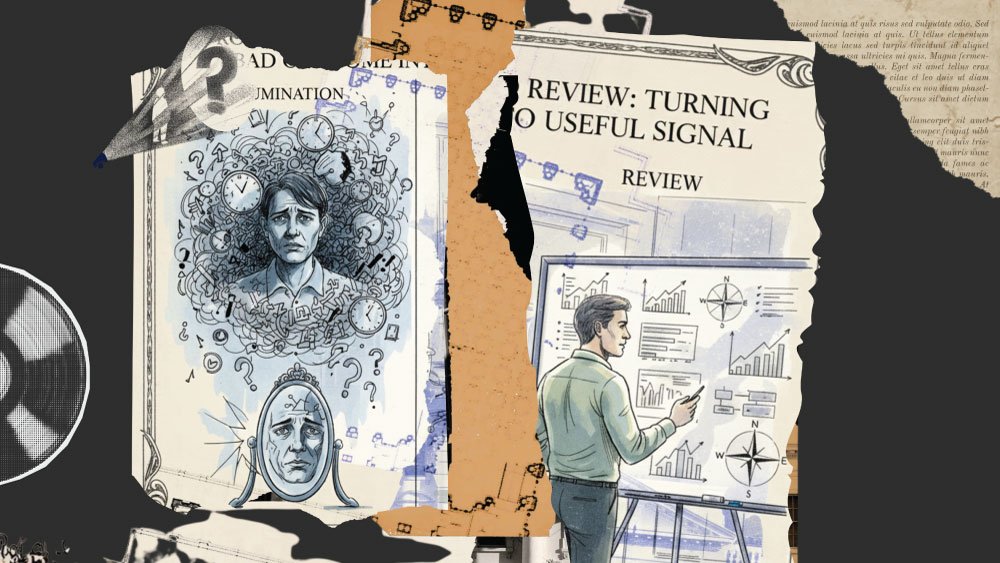
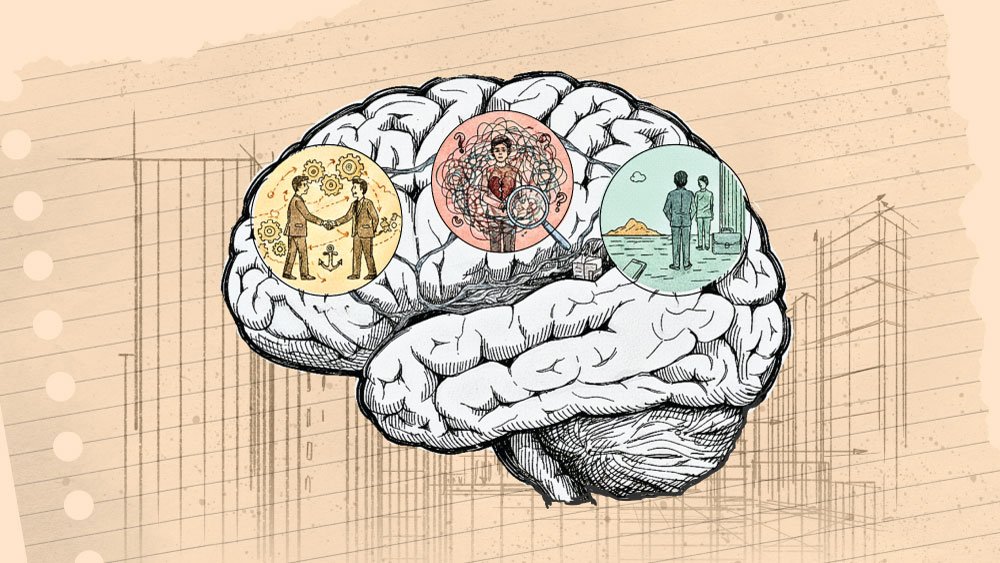
Losses are part of investing and building. What hurts performance isn’t the loss itself, it’s what happens next. Most professionals slip into rumination: replaying the event, scanning charts or emails, and amplifying emotion without producing any new insight. A review, by contrast, is a short, neutral look at what occurred and how the process will be improved. This piece explains the difference, why it matters, and what an effective post-loss review contains, without drills, prompts, or “hacks.”
Rumination vs. Review
- Rumination is repetitive, emotion-led thinking. It chases relief. Typical features: looping on “what ifs,” checking prices or threads for reassurance, and expanding the story with adjectives and judgments.
- Review is limited, fact-led analysis. It seeks learning. Typical features: a brief written record of the setup, actions, context, and a concrete adjustment to the process.
The shift from rumination to review isn’t about being tougher, it’s about changing the goal, from soothing emotion to improving decisions.
Why the mind drifts into rumination
- Physiology first: After a loss, the body’s threat response narrows attention and pushes for quick action. Thinking speeds up; nuance drops.
- Reward wiring: Markets and deals deliver variable feedback. Surprise moves train “just check again,” which feels productive but rarely is.
- Cognitive load: High input (news, chats, dashboards) makes it easier to keep scrolling than to close the loop.
Knowing these forces reduces self-blame and makes it easier to choose review over replay.
The real business cost of staying in rumination
- Process drift: Plans change mid-flight without documentation, making future audits impossible.
- Revenge decisions: New positions or negotiations are entered to fix a feeling, not to follow a strategy.
- Attention debt: Time spent rehashing crowds out preparation for the next good opportunity.
- Culture impact: Teams copy the mood; calm execution gives way to reactive behaviour.
The anatomy of an effective post-loss review
A good review is short, scheduled, and repeatable. It usually includes:
- State reset
A brief pause to let arousal settle (slow exhale, softer gaze, feel the chair). The aim is not relaxation; it’s enough calm to think clearly. - Factual record
The thesis in one sentence; entry, size, exit; key timestamps; what changed in the data. Adjectives and explanations are avoided at this stage. - Context snapshot
Market backdrop (volatility, events, liquidity) and relevant personal context (sleep, time pressure). This distinguishes a bad outcome from a bad process. - Process classification
A neutral tag for what went wrong (e.g., “off-plan entry,” “exit before signal,” “skipped base-rate check,” “size outside rules”). Labels create a searchable history. - Rule library update
A small, specific adjustment added to the operating rules (for example, “no re-entries within 30 minutes of a stop,” “scale out in two steps,” “confirm with base rate before adding”). The library is a living document, not a memory. - Closure & archive
The review is saved to a log with a standard filename and date. Platforms are closed until the next scheduled window. The loop is intentionally ended.
This structure keeps the review practical and protects it from becoming another form of rumination.
Logging hygiene that makes reviews useful
- Consistency: Same sections, same order, every time.
- Brevity: One page is ideal; dense logs don’t get read.
- Searchability: Standard tags (instrument, sector, strategy, process tag) enable patterns to surface later.
- Access: Store logs where the future you,or your team, can find them quickly.
What improves when reviews are done well
Teams that adopt a simple review habit typically see:
- Lower review latency: The time between outcome and written review shrinks to hours, not days.
- Fewer off-plan actions: Impulsive entries and exits drop because rules are clearer and recent.
- Longer hold on winners: Patience increases as fear is separated from process.
- Cleaner communication: Memos and partner updates shift from story to signal.
- Steadier confidence: Self-trust grows from visible follow-through, not from perfect outcomes.
These gains arrive gradually but compound.
A loss is a data point. A review turns it into a process improvement. Keep it brief, factual, and repeatable, and let the next decision benefit from this one.
Book a 15-minute “Performance Edge Audit.”
We’ll map your current decision habits, pinpoint the patterns costing you most (dysregulation, dopamine loops, money stories, attachment reflexes, or review gaps), and install one simple, customised protocol you can use the same day.