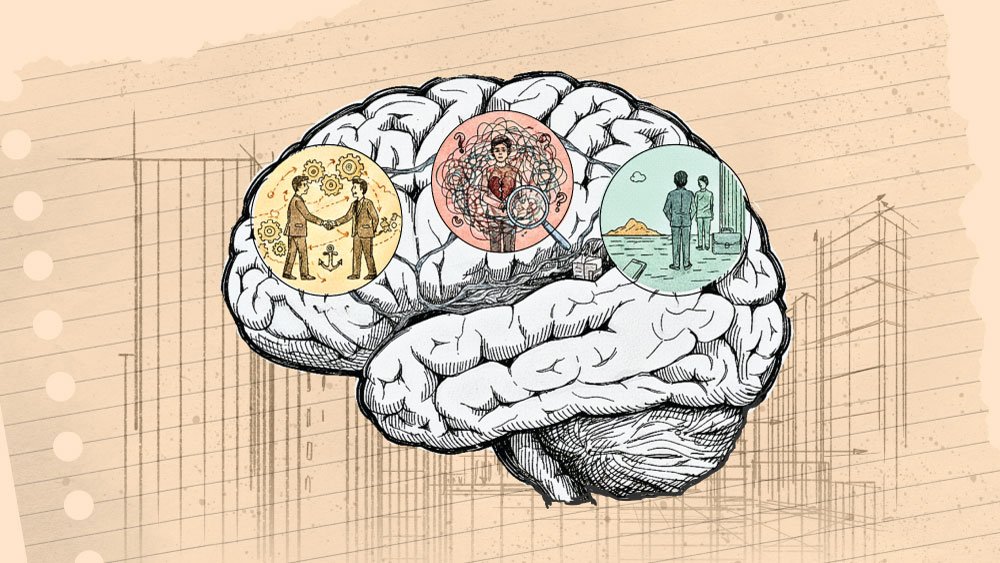
When your body is calm, your brain thinks clearer.
Two to three minutes of physiology regulation before a pricing call, supplier negotiation, trade, or hiring decision will beat “trying harder” every time.
The moment that matters (and why “trying harder” fails)
Calm body, clear brain. That’s the cheat code.
Picture it: you’re about to sign a 12-month supplier contract, approve a big ad budget, or green-light a key hire. Slack pings. The inbox is red. Your heart’s up. Vision narrows. Suddenly there are only two options: go all-in or pull the pin.
That’s not a “mindset” problem. It’s a physiology problem.
When stress spikes, your autonomic nervous system (ANS) shifts your body into threat mode. Blood flow moves to big muscles, not deep thinking. You get tunnel vision, binary thinking, and risk myopia. In other words, your body makes the decision for you, unless you regulate first.
The big idea: Physiology → Decision-making → Results
Your physiology (how regulated or dysregulated your nervous system is) sets the ceiling for your decision-making (how many options you can see and evaluate). That, in turn, drives your results.
- Regulated physiology: wider perspective, better working memory, more patience to let good theses play out.
- Dysregulated physiology: narrowed perspective, snap judgments, chasing immediacy over asymmetry.
The solution isn’t more willpower or another mental model. It’s a short, reliable physiology reset you run before big calls, so your very good brain gets a fair shot at doing its best work.
The real cost of dysregulation
If you skip a pre-decision downshift, expect these three expensive patterns:
- Binary thinking: “All-in or nothing” replaces nuanced position sizing.
- Time compression: You demand instant feedback and amputate winners early.
- Risk myopia: You overweight fresh information and underweight base rates.
None of this is a knowledge gap. It’s your ANS hijacking the controls.
The 3-Minute Downshift (use anywhere, no one will notice)
Total time: ~180 seconds. No app. No woo. Just cues your nervous system recognises.
Minute 1 — Breathe (exhale-biased):
- Inhale through the nose for a count of 4.
- Exhale through the mouth for a count of 6–8 (longer out-breath tells the body it’s safe).
- Do 6–8 cycles. If lightheaded, ease the counts.
Minute 2 — See wider, sit wider:
- Soften your gaze and notice the edges of your visual field (peripheral vision signals “no immediate threat”).
- Unclench the jaw, drop the shoulders, and let your seat take more of your weight.
Minute 3 — Ground and rate:
- Name 3 physical sensations you can feel (e.g., “cool air on hands,” “weight in chair,” “shirt on collarbone”).
- Rate your arousal 0–10 (0 = flat, 10 = maxed).
- If you’re >6, do 2 more exhale-biased breaths.
You’ve just shifted from reactive to responsive. Now decide.
The Pre-Decision Checklist (print this)
Use after the downshift. If you can’t answer these in one calm breath, you’re not ready.
- What’s my base rate? (A grounded, external reference, not just a story.)
- What am I optimising for? (Return and time and risk; state it.)
- What would change my mind? (Define disconfirming evidence now.)
- Position sizing rule? (Not vibes. A rule.)
- Exit rules? (Profit and loss, plus a review trigger.)
Pro tip: read these out loud. Hearing yourself forces clarity.
From “urgent” to “clear”
Before: A small business owner or business consultant sits down to approve a late-stage round while markets are jittery. Heart rate’s up, inbox is red, and the team wants an immediate yes. He’s thinking, “If we wait, we lose the allocation; if we commit, we might wear the downside.”
After the 3-minute downshift:
- Perception widens: he notices two non-urgent paths previously invisible, commit with a milestone-based tranche or negotiate a ratchet tied to revenue quality.
- Checklist forces specifics: he states the base rate for similar companies reaching breakeven, writes a clear disconfirming datapoint, and sets exit rules for the tranche.
- Outcome: a better-priced position, cleaner risk, and a calmer team.
The deal didn’t change. His physiological state did.
Frequently seen objections (and how to handle them)
“I don’t have time for this.”
You don’t have time for bad calls either. Three minutes now beats three months cleaning up.
“This feels like soft stuff.”
What’s softer: a protocol that widens your option set, or white-knuckling through tunnel vision?
“I already meditate.”
Great. Meditation trains baseline regulation. This protocol is applied regulation: in-the-moment, targeted, and measurable.
Implementation: Make it automatic in 5 days
Day 1–2: Reps without stakes. Run the 3-minute downshift twice a day before routine tasks.
Day 3: Add the checklist. Answer the five questions for a small decision (calendar, email, spend).
Day 4: Stress-test. Use it before one higher-stakes call. Notice differences in options seen and tone of voice.
Day 5: Codify. Put the checklist on a card beside your screen. Add “3-minute downshift” as a calendar snippet before key meetings.
If you lead a team, make this a pre-mortem ritual: everyone takes one minute to downshift, then answers, “What could make this a bad decision?”
Metrics that prove it’s working
- Fewer “instant” reversals (you stop undoing decisions within 24 hours).
- Longer average hold on winners (patience increases).
- Cleaner meeting transcripts (fewer interruptions, more summarising).
- Lower “decision regret” score (rate 0–10 after big calls; watch the average drop).
No guru vibes. Just track the real-world outcomes that matter.
Book a 15-minute “Performance Edge Audit.”
We’ll map your current decision habits, pinpoint the patterns costing you most (dysregulation, dopamine loops, money stories, attachment reflexes, or review gaps), and install one simple, customised protocol you can use the same day.